Wednesday, October 10, 2012

Found in New Zealand . . .

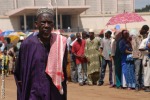
That's Melissa Huestis from Brisbane, Australia 
and I'm holding a sweet little one with a cleft lip.

Wednesday, September 19, 2012

Reka!

I met my Hungarian friend, Reka, at the airport when we arrived in Lome this summer.  I saw her frequently on the ship as her (and her husband, Darren's) cabin was just around the corner from ours.  When I was seasick, I had Reka!  When I was lost, there was Reka!  Reka - a voice of encouragement!  I stole this from her blog so you could meet her heart and experience screening day through her:

Our photo stand is the last stop before they leave the building. By then they are are extremely tired, both physically and emotionally. Most of them had been standing in line for a good 5+ hours and even though we were giving out water and sandwiches we couldn't protect them from the sun. They are exhausted emotionally as well; many of them are so used to hearing NO that they cannot afford to allow hope sneak into their hearts. As they get closer to the gate...inside the gate...meet the pre-screener...GET PAST the screening station... escorted to the first station, then the second... all the time expecting to hear the dreadful word and yet a tiny hope is rising deep within as they get closer to the last station, our photo booth. It's hard to see their genuine smiles through the veil of wariness!


Outside there was some breeze that helped easy the discomfort of everybody, patients and crew alike. Inside, where we worked, it was hot, humid, stuffy, stinky… you name it. We tried to open the windows, but the generators were placed right outside the walls. We couldn’t hear each other’s words! I opened one slightly. Fresh(er) breeze entered our booth and we could all take a deep breath. Deb was standing 3 meters away from me and I saw her lips moving… darn, we must close that window NOW! :(
We have about an hour before the first patient makes it to our station so I go outside. Screeners stand in front of the patients' line, each with a translator. Their job is to decide if the patient has something we can treat thus sending them towards the building or turning them down. I stood behind Ans, who is a Chaplain on board now, but a nurse by profession. She raises her hand (saying she is ready for the next patient) and a young men steps forward. To my untrained eyes he looks fine. Of course I am neither a doctor nor a nurse, but I did learn a lot since I joined this unique hospital. Ans greets him and asks the standard question : what’s the problem. I can’t see the nurse or the translator as they have their backs to me, but I have a clear view of this man’s face. He is touching his head as he explains his reason for standing in line for so long. The translator conveys his words to the nurse. She nods, asks a few more questions in return. The man’s eyes grow narrow as he listen to the translator, clearly not liking the direction of the conversation. His behaviour changes: he puts his hands on his stomach, then on his back, his speaking becomes  fast, his gestures desperate. The nurse listens patiently, but I guess they both know the answer will be no. He desperately tries to convince the nurse, his eyes are begging, but the answer is still NO. We do not treat back or stomach pain and we do not give out free medicine. We are a surgical hospital!

It’s a tough call! Clearly it’s not the answer this young men was hoping for. His whole body looks broken all of a sudden. It’s a horrible feeling for everybody: for the nurse, for the translator, for the man, even for me, who is only observing the scene from afar. The nurse looks apologetic as she calls for an escort. The man sadly accepts the answer and starts to follow to escort towards the exit gate, which is opposite to the building. On his way out they stop at the prayer station where we offer prayer for those who got ’no’ and would like us to lift them up in prayer. As he walks out he keeps looking back towards the building; the building of hope… 

I go inside and embrace myself for a long and busy day. As the first patient arrives we jump into action. The 2 translators who were promised to us didn't show up so we have to do without a common language. I smile at the lady and force myself not to look at the massive goiter on her neck. I offer my little French to her (Good morning, how are you, my name is Reka, I don't speak French). When she keeps starring at me I realize that she doesn't speak French either. Oh well...

I take her papers and copy her name, patient number and surgery type onto a small white board. This will serve as patient ID and also as the "before picture". I motion to her to follow me. I take her precious yellow card and she looks at me worried. I desperately try to tell her I am not taking her card away, I just need to take a picture of it. I don't think I will ever be able to fully comprehend the significance of this small yellow piece of plastic. For them, it's their life line!

She sits down to my stool. I ask her to smile. She gives me the African smile. (very straight face, no showing of emotions). Suddenly the next patient shouts something at her in susu or pular at which point she offers a tiny smile. I go over there and ask in English if she understands me. "I de tak na sma-sma englis" I jump for joy! She speaks Krio, a language that I more or less understand!!! :)

This lady is from Sierra Leone. She came over the border just to be seen by our doctors. She, too, has a huge goiter on her neck, and to my amusement, her name is also Jane Kamara (well, it's not. I don't want to give out her real name, enough to say Kamara is a very common name in Salone and in Guinea as well. Imagine like Jane Smith x2) So, my first 2 patients had the same name and the same condition...

I happily accepted her help. She was translating my words to Susu as I later found out, one of the many tribal languages here in Guinea. When the first Jane Kamara left, she hopped onto my stool and gave me a wide grin. "Yu de make me pretty, yes?" Yes! :) I showed her the head shots I took of her and her neck from each angle; she approved.  She is scheduled for surgery in a few weeks! I am so looking forward to meeting her in the wards! She told me she had traveled for over a day to make it here. Last year when the ship was in Salone she couldn't make it to our screening and she was over the moon when she found out we are coming to the neighbouring country. Now she WILL RECEIVE a surgery! :)

The next 3 patients I photographed were also called Kamara - some spelled like Camara to show the French influence. Over the course of the day I think we photographed over 50 patients with goiters! Yay!!!
As we suspected, many came from Sierra Leone. Jess, our dietitian shared similar experiences. Last year she treated a little boy who was soooo malnourished due to a cleft lip and palate. He couldn't suck milk from her mum's breast and was too tiny for operation. Jess worked with him for months before he gained enough weight for a surgery. They fixed his cleft lip back then, but he was too young for the palate surgery. Jess told them last year to try to make it here for a second chance. She was looking out for them all day and finally she saw the mum! They didn't have any common language, but the joy in both their eyes spoke loud enough!

Later in the day this little fellow (now over 1 year old) ended up on my table. We had to photograph his palate. Now... THAT was a challenge, let me tell you! To begin with these babies have very tiny mouths! Even if you get them to open their mouths you still won't see the palate without tilting their heads back. Even if you tilt their heads back you can't keep them still long enough to take a picture. Even if they lie still with heads back and mouths open, the flash is not lighting the mouth up enough, because you have 3 extra people hovering over the baby: 1 to make them still, 1 to tilt the head back and 1 to hold the mouth open with a tung depressor. :)

If you stood a bit further away you wouldn't see the baby, just hear their cry and see 3 adults surround the table while I stand on a chair with a huge camera and flash in hand doing my best to get a sharp picture of the palate... Fun times! :) And to make matters worse in some cases the mothers didn't want our male helpers to touch their babies. I understand the whole Muslim thing and tribal beliefs, I really do, but what do you do when you have a long queue of patients to photograph and a reluctant baby with a difficult mother???

Another challenge presented itself in the forms of doctors' hand writing. (see my note on this matter here) Sometimes the condition is obvious, but sometimes the patient looks fine to me. Before I ask them directly, I try to look through their papers and decipher the doctor's scribble. NOT easy! :)

The other big challenge we faced was taking pictures of "Ponseti Kids". (Ponseti is a special technique to fix club feet of little children with a series of casts instead of an operation). The Ortho doctors requested a series of pictures (30+) in different positions and angles to test the abilities of the kids. Before the screening we asked one of the healthy kids on board to be our model so we could take test pictures of each angle and position, also bending and stretching each knee and ankle in every possible direction - it took over 25 minutes! And she understood English, she wasn't afraid of white people, we weren't foreigners to her and above all, her legs and feet were fine! Now, imagine this procedure with a kid who is the exact opposite in everything...

Maybe I shouldn't say it, but by the end of the day I "earned" the name "child torturer" :)))

All in all, it was a very rewarding day! Yes, it was long (we finished taking pictures after 9 pm), yes it was exhausting and yes, sometimes it made us cry, but it was all sooooo worth doing! :) I thank God I could be part of this day and see the Miracle in Action!

Thursday, September 6, 2012

$3868.48

Given by you to us to change lives in Guinea!  To God be the glory!


Wednesday, September 5, 2012

Tidbits . . .

Today, I'm going to post three tidbits - each one bringing glory to our Heavenly Father.

TIDBIT ONE:  $3868.48
Lynette just mailed a check off to Mercy Ships for $3868.48 - the amount left in our account from the summer!  Let that number sit on you for a bit, and then read what my friend and running partner, Tiffany, wrote on her blog about screening day on Monday:

TIDBIT TWO:  Screening Day, September 3, 2012 by Tiffany Bergman


"Yesterday we showed up at 2:00pm to set up the stations, walk through the building, and prepare for the big day.  As commonly happens in Africa, things didn't go quite as expected. 

We weren't able to utilize the whole building yet.  A wedding and concert were scheduled Sunday night at the venue, after we were promised it in entirety from 2:00pm on.  The man with the keys for the room where our tables and chairs are being stored doesn't show up.  So we return, late in the evening, with headlamps and torches (sorry, flashlights) to move chairs, tables and hang maps.    Lord, what are you doing?  Will the patients come?  Did word get out adequately?  Will the rains keep people away?  Will safety prevail?  How will we look back on this day?

Prayers are going up worldwide.  By the thousands.  By the tens of thousands.  The network of people lifting up this event to the Lord looks like an AT&T worldwide coverage ad.

We caravan in the dark through the city.  Land Rover after Land Rover.  If they didn't know we were here yet, they do now.

The line - it's like a congo line.  People running, hobbling, shuffing but just can't catch up to its end.  From 200 standing in line at 4:59am to 2000 in a matter of minutes.  They are showing up by the carload.

Are they just curious?  Have they heard that miracle workers are here?  Will they be looking for asthma, arthritis and cures for genetic defects?  For some, yes. 

But, oh!  The large numbers of facial tumors!  They keep coming!

This is what hope looks like. 

The fear -  of seeing these faces that have been stretched beyond recognition by forces beyond their control - this fear, is gone.  Now my face lights up with joy as I see these precious ones who have lived in desperation for years, ashamed and devastated by their own appearance.  And they come, afraid to set their hopes too high, convinced that they are beyond help. 

I make eye contact, finding the eye that has the best visibility - this can be the trickiest part.  I smile from the depth of my heart.  A smile that says, "You are welcome here! You are not forgotten!  God has not given up on you.  He sees!  We are SO glad to see you!"

First by a trickle and soon a swiftly flowing river of patients make their way through the maze of stations we have.

4300 people have come through the iron gates onto the front lawn of the People's Palace.  Nurses evaluate each and every person who has chosen to wait hours in first the drizzle, then the clouded humidity, and finally the sun.  Over 500 people are screened by our eye team outside and determined that we could potentially help them further. 

Those with other surgical issues we could potentially treat are escorted inside to begin the collection process on their information.  Each type of condition is brought to see doctors, surgeons and nurses to determine the next step: schedule a surgery, xray, CT scan, waitlist or if we are unable to help.   Escorts continue to guide the nearly 850 patients (plus their loved ones) through the three stories of stations.

Finally they reach the ground floor (Ground Zero) and they are nearing the end of their day with us.  I await at the Card Issuing Station.  And we see them all: Orthopedic patients: little ones with feet seemingly attached upside down, babies with Kermit the Frog legs whose knees look like they are reversed as they touch their chests effortlessly, twelve-year olds that measure three feet tall with legs bowed almost in a complete circle.  Babies, children and teens with cleft lips and palates - their beautiful smiles of joy stretching even wider than our lips allow.  Patients who had surgery on one of the previous Mercy Ships, the Anastasis, in 1998 to repair a condition and now have returned for their follow up surgeries.  They have waited 14 years for our return!  Sierra Leonean patients have crossed the border with their paperwork that states they will need a second surgery and even though that date is November or next January, they come expectantly, knowing the schedule is limited.  VVF ladies have found there way here, with a big "YES!" written on their paperwork from our nurses.  The crook of a burnt arm, the taut marbled skin of a burned cheek and eyelid, both young and old have suffered at the hands of an open flame. The embarrassed faces, the shame that has veiled them vanishes as I stretch out my hand with a "Bon Soir, comment ca va?"  To be looked in the eye and treated as a valued equal, to know that there is a chance that help has arrived for them.  This gives them a tangible hope.

They leave with a plastic card: PATIENT.  They each have a name, a number, and the next step.  For some it's another screening day (on a smaller scale, with a specific surgeon who will identify his/her own patients), for others it's being on a waitlist and they are told to keep their cell phones turned on.  And for others they have an appointment on the ship - a Scan.  An Xray.  An admission.

These are the days when we see that for hope to be credible in the future means that we have to be tangible in the present (US Ambassador Robert Seiple).

This is a day when you can taste the hope.  

TIDBIT THREE:  CAM and I
I'm not sure when it happened or how it happened or where it happened (but I really am thinking Africa this summer!), but according to the doctor, I tore my "peroneus brevis. It is one of the muscles on the outside of your leg that helps turn your ankle out and it helps in preventing spraining your ankle when you turn it in. The tear seems to be near the lateral malleolus, or the outer ankle bone, just behind it."  So the CAM boot and I will be best buds for the next two to six weeks.

Tuesday, August 21, 2012

Land Ho!


The Africa Mercy will be arriving in Conakry, Guinea tomorrow (or maybe that's just later tonight for those of us here in the States)!

A few facts about the nation of Guinea:
  • United Nations Human Development Index:  Ranked #178 out of 187 countries listed.  The only country lower that Mercy Ships has visited was Sierra Leone in 2011 at #180;
  • Independent from France since 1958 – currently a Republic;
  • President:  Alpha Conde since 2010;
  • Life Expectancy: 58 years;
  • Population:  over 10 million people with over 1.5 million living in the capital and port city of Conakry;
  • Area:  245,857 square kilometers (size of Oregon);
  • Income:  $863 per year;
  • Population under the age of 15 years: 43%;
  • Religion:  Muslim 85%, Christian 8% and Indigenous Beliefs 7%;
People's Palace
As you read this, pray for the upcoming surgical screening – to be held on Monday, September 3rd.  Pray that those who could be helped would hear about the screening and be able to attend.  Mercy Ships will be using the People’s Palace, a three-story building that should provide good protection from rain (as they are in the rainy season) or sun during the day.  All of the crew (both medical and non-medical) will be involved in this event as well as more than 100 local day workers who are essential in the translation process.  Set up and around the clock security will begin the afternoon prior.  Crowds of 3,000-5,000 are anticipated, and a secondary day of screening will be held if necessary to attend to all those waiting for care.  This is Mercy Ships first visit to Guinea since 1999 when the Anastasis visited.

Sunday, August 12, 2012

Africa . . .

I copied my friend Kristy's blog for you.  We met in 2007 at church right here in Lakeville.  That summer, I visited Kristy at her home in Durban, South Africa and the following week she visited me on the m/v Anastasis in East London, South Africa.  She and her husband, Ben, now live in Burundi with their two young sons, Miles and Neo.  I admire them and their love for the people of Africa and their hearts for God.  They truly are incredible.  
…
I just want to say,
that I see you…
even though I am cushioned
by everything you lack.
My self aches.
It’s an unmovable ache.
It’s the ache of living next door
to YOU.
The ache of MY “haves” and YOUR “have nots.”

…
I want so badly to escape your story..
The truth is, it makes me UNCOMFORTABLE.
Poor uncomfortable me, while you, on the other hand…
actually struggle to survive.
I feel like no matter what we do…
it CAN NEVER BE enough.
I hate that poverty makes you beg.
As a good middle-income-bracket-midwest-girl…
I cringe that when you see me you see “money.”

poverty, living with poverty, poverty in east africa, poverty in burundi, long miles coffee project
…
I hate that you are right.
I DO “have everything” I need.
Without fail you will shout at me…
“Hey, white person. Give me a pen!”
My color, and what it means to you,
makes it so hard for us to just be friends.
Poverty is like a hole
and it sucks anyone around
into it’s blackness.
…
There is hope, to be sure…
but sometimes I just can’t see it through the ache.
The ache of deformed-legs-man “walking” on hands.
The ache of swollen bellies on young littles.
The ache of baby dead in mother’s arms.
The ache of knowing that the pen you so badly want
WON’T fill your belly
or keep you safe tonight.
…
I see you,
even though sometimes I just want
to pretend you don’t exsist.
To look right past you banging on my window.
Seeing your pain saps me. Again, “poor me.”
The truth is, I always SEE YOU…
and I wish I saw a different picture.
I wish I was seeing
a healthy-happy-roof-over-head-belly-full-of-food YOU.
…
I wish I was doing MUCH more to make that picture REAL for you.

Monday, July 23, 2012

What happened in Togo?

Do you ever wonder what happened before we arrived in Togo?  After all, we got there on the last day of surgeries and things were being packed up.  I snagged this from my friend Jodie's blog.  Read and be encouraged by the ministry of Mercy Ships.  

Legacy in Lome


When we depart from each country that we visit it is our prayer and desire that we have left behind a legacy, a legacy of hope, a legacy of healing and a legacy of God's love in action. Most of us will never know the sheer desperation and isolation that those in developing nations face when struck down by an illness, a birth defect or one that appears later in life. When the Africa Mercy sails into the ports of some of the poorest nations on earth we have a job to do, a God ordained legacy to leave behind.
Eye Surgeries (Mercy Vision)
*  794 Eye surgeries performed
* 1,718 UV blocking sunglasses, 1,160 reading glasses, 43 prescription glasses dispensed
Maxillo-Facial Surgeries (Outlook of Hope)
* 315 Max fax surgeries including 34 cleft lip and/or palate repairs


Plastic Reconstruction Surgeries (Reconstructing Hope)
* 72 Plastic surgeries
*509 Physio encounters
* 409 Occupational Therapy encounters


Specialised Surgical Solutions
* 219 General Surgeries (mainly hernia repairs on young males such as the man above)

VVF (Vesicovaginal Fistula) Surgeries (Hope Reborn)
* 49 VVF Surgeries
Above a VVF patient celebrates in her new dress and head dress given to all the VVF patients.

Togo Smiles (Dental)
* 9,688 Dental procedures performed for 4,649 patients
* Dentures for 454 patients
Photo above is the dental team celebrating their 3,000 patient in Togo 2012 field service.

Palliative Care
* 14 patients regularly visited

Plastics and Ortho Follow Up (Togo 2010 Patients)

Patient Life Program
* Available to our patients 24/7 providing counsel and comfort as well as taking care of the practical needs of the patients.

Capacity Building
* Workshops held so that highly skilled personnel can train many different groups of professionals on issues such as mental health and trauma.
* Children's Camp held for 30 local children.

Leadership Conferences
* Average of 892 leaders attended various conferences.

Food for Life Agricultural Training
* Training trainers in modules such as composting, mulching, soils, animal husbandry and nutrition.

Anaesthesia and Midwifery Conference
* 121 Health care professionals and 18 students attended a two day conference.

The Hope Centre (Hospital Outpatient Extension)
* 1035 people participated in community health education on subjects such as malaria, worms and immunisations.
Above a Hope Centre day worker teaches patients and caregivers about the affects of worms.

Day Worker Education
* 36 Hospital day workers received instruction in various health care matters
* 15 day workers received instruction in palliative care matters
* 1 day worker received instruction in sterilization

Mercy Ministries
* Hundreds of crew members were regularly involved with ten local partners. In addition, and in partnership with a group of local church leaders, the Jesus film was viewed by thousands in their local language. Hundreds expressed commitments to Christ and requested prayer.
Above crew members visit the Quatre Libre with YWAM.

Donations
* Mercy Ships was able to make dozens of donations to hospitals, clinics, WHO, other mission and aid organisations, churches, church leaders, schools and libraries. As well as corporate donations, hundreds of individuals crew members made donations of both cash and possessions to local individuals and organisations.

These numbers are obtained through the sacrifice of volunteer crew, prompted into action by the whisper of the Holy Spirit, from every corner of the globe, offering their skills and talents, funded by those at home to leave behind a legacy that will remain long after the Africa Mercy sails away.